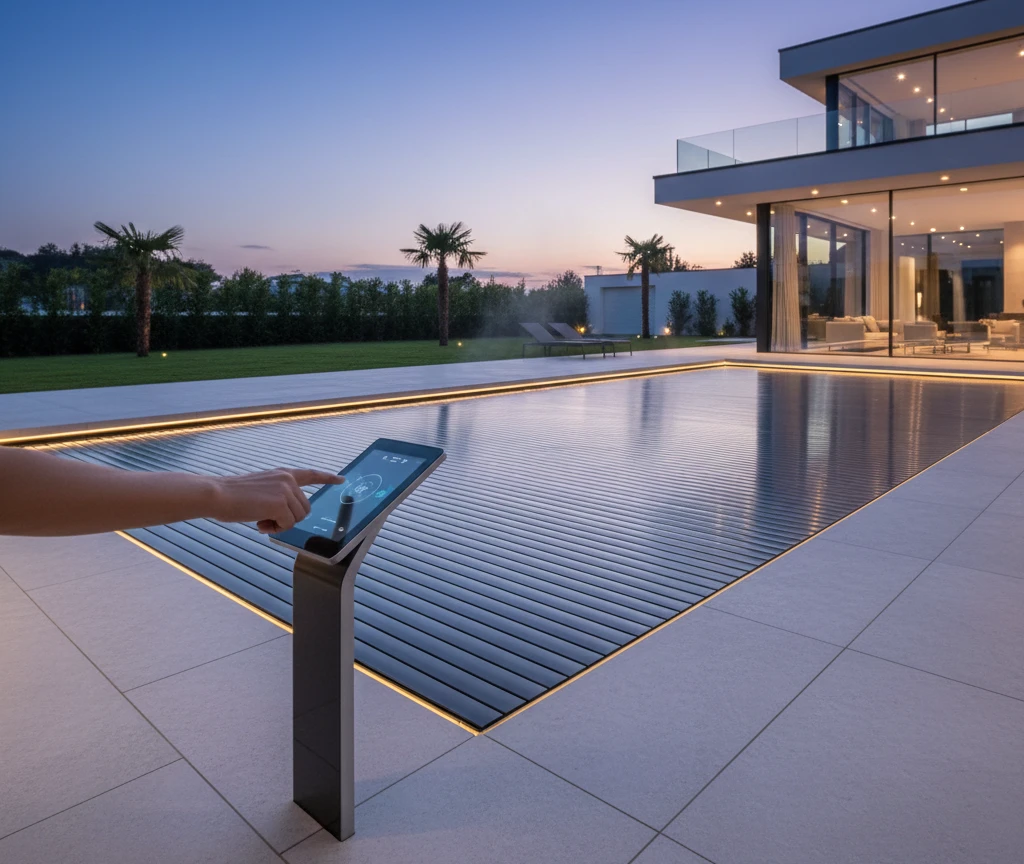
The Smart Shield: Advantages and Limitations of Electric Pool Covers
For pool owners, an electric or automatic pool cover represents the ultimate fusion of convenience, safety, and energy efficiency. These high-tech covers glide open and closed at the touch of a button, transforming your pool maintenance and utility bills.
While the benefits are significant, especially with modern smart home integration, understanding the limitations is crucial before making the investment.
The Advantages: Convenience, Safety, and Savings
Electric pool covers offer three major selling points that standard manual covers simply cannot match.
1. Unmatched Convenience and Usability
The primary appeal is ease of use. A manual cover often requires two people and a lot of effort, which means it frequently goes unused. An electric cover can be deployed or retracted in less than a minute.
- Instant Use: The quick, automated operation means the cover is closed every time the pool is not in use, maximizing energy savings and cleanliness.
- Remote Control: Modern systems integrate seamlessly with remote keypads, wall-mounted controls, and, increasingly, with comprehensive smart home systems.
2. Massive Utility Cost Savings
Pool heaters are huge energy consumers, and heat loss occurs primarily through surface evaporation. An electric cover is the best way to combat this.
- Evaporation Reduction: Covers virtually eliminate water evaporation, which is responsible for 70% of heat loss. By stopping evaporation, the heater runs far less often.
- Chemical Reduction: Less evaporation also means less water replacement and reduced chemical consumption (chlorine, stabilizer) by up to 60%.
- Solar Heat Gain: Opaque or dark-colored covers absorb solar energy, acting as a passive heater and further reducing reliance on the pool heater.
3. Superior Safety Barrier
An automatic cover acts as a robust, horizontal safety fence over the water. Once closed, many systems are strong enough to support the weight of several adults.
- Drowning Prevention: The solid barrier prevents accidental entry by children, pets, or wildlife, offering an unparalleled layer of protection that operates automatically.
- Compliance: In some jurisdictions, an automatic cover may satisfy part of the required safety barrier regulations, though local codes must always be checked.
The Smart Home Revolution
The latest generation of electric pool covers are designed for the interconnected home, moving far beyond simple key switches.
- Integration: Many leading manufacturers offer control modules that speak directly to major smart home platforms (like Google Home or Apple HomeKit) or professional pool automation systems (like Pentair or Hayward).
- Voice Control: You can integrate voice commands to open the pool cover (after unlocking a safety sequence, of course).
- Conditional Automation: The cover can be programmed to close automatically based on conditions, such as closing at 8 PM every night or closing if the weather sensor detects heavy rain or wind.
The Limitations: Cost, Installation, and Geometry
While highly beneficial, electric pool covers come with certain drawbacks that must be considered during the planning phase.
1. High Upfront Investment
Electric covers are significantly more expensive than manual models. The initial cost for the motor, track system, and heavy-duty vinyl can be substantial, often ranging from $8,000 to $20,000 or more, depending on the size and shape of the pool.
- Return on Investment (ROI): While the utility savings are large, it takes several years for the cover to pay for itself through energy cost reduction.
2. Design and Shape Constraints
The mechanics of an automatic cover require straight, parallel tracks.
- Rectangle Only: Electric covers work best, and often only, on rectangular pools. Freeform, L-shaped, or kidney-shaped pools are extremely difficult or impossible to fit with an automatic system due to the need for a uniform opening.
- Deck and Coping Requirements: The deck surrounding the pool must be flat and wide enough to accommodate the tracks and the housing pit for the rolled-up cover. Installation on existing pools may require modifications to the coping or decking.
3. Maintenance and Repairs
The moving parts, tracks, ropes, and motor require occasional maintenance.
- Debris: Small debris or ice in the tracks can cause the mechanism to jam.
- Motor Replacement: Motors are robust but will eventually require replacement, which is a specialized repair. While rare, any malfunction renders the cover unusable until fixed.
Conclusion
An electric pool cover is one of the most impactful upgrades a pool owner can make. The convenience, unparalleled safety barrier, and dramatic reduction in heating costs quickly justify the investment for owners of rectangular pools. However, homeowners must weigh the high upfront cost and the geometric constraints against the long-term benefits before moving forward with this powerful smart technology.